
Business decisions you can trust. From data you couldn’t use.
Arkiba AI organises fragmented records around the categories that matter to your business, revealing patterns and comparisons that messy data keeps hidden. Built-in checks help catch errors, with evidence your team can review before acting.
The same item appears under different names. Unlike records end up in the same category. Versions sit in separate spreadsheets. Until those differences are resolved, useful comparisons, trends, and exceptions are hard to see.
Structure the data. Uncover insights. Check the analysis.
Structure the data
Classify records by what they mean in your business, including the details that make items comparable. Preserve source references, check available totals, and bring uncertain classifications to your team for review.
Uncover useful insights
Compare like with like, track changes across versions, and identify unusual values within meaningful groups. Industry-specific categories and calculation tools make questions answerable that fragmented records could not support.
Check the analysis
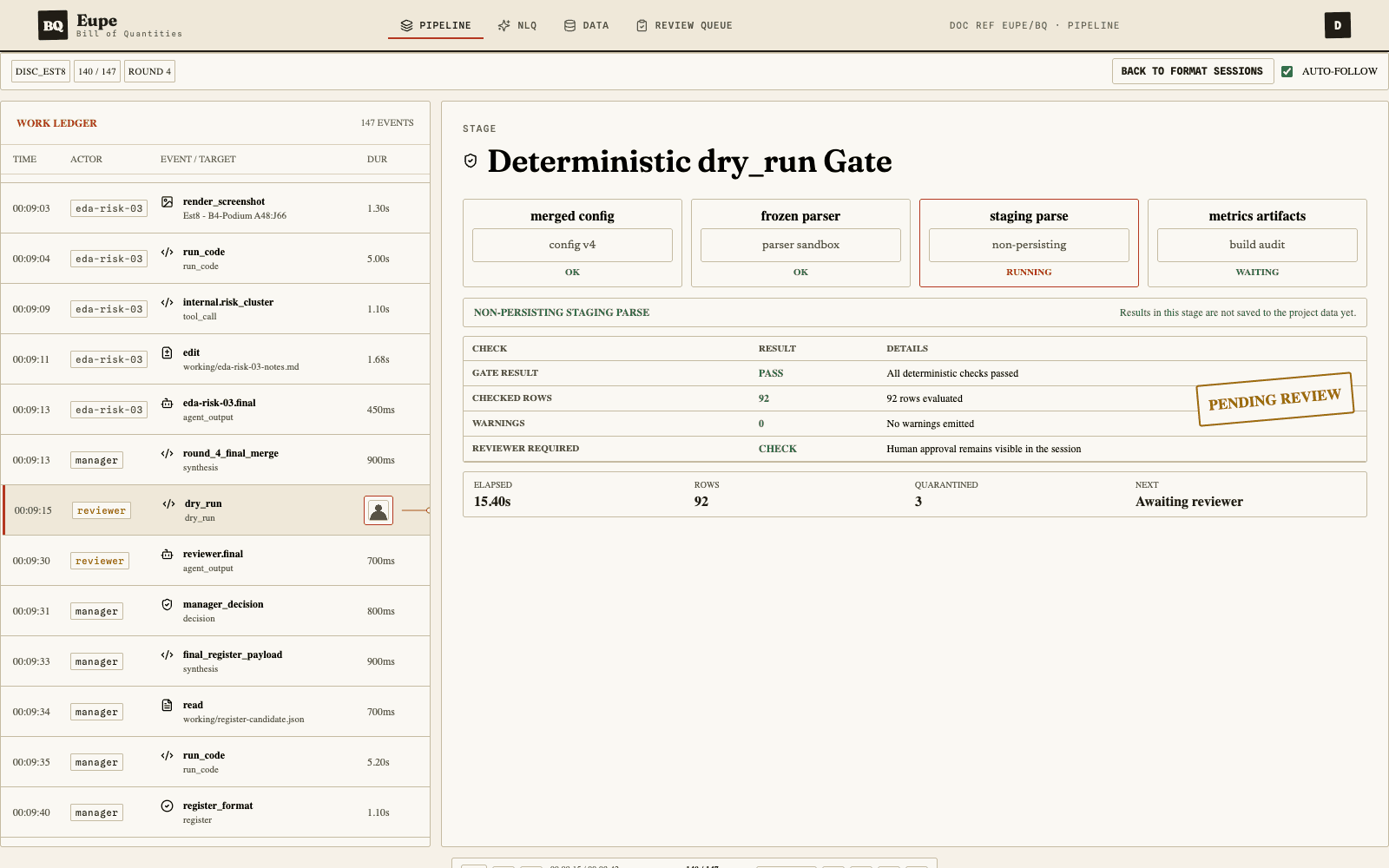
Calculation checks and comparison rules help catch errors. A separate AI reviewer can examine the analysis and request corrections. Your team can inspect the supporting records, methods, and unresolved issues before acting.
A clearer view of what drives project costs.
A property developer needed more detail on where they were overspending, to control costs and reduce the risk of project overruns. Their Bills of Quantities held valuable cost history, but inconsistent layouts, descriptions, and pricing versions made comparisons difficult.
Arkiba AI organises priced items into detailed, consistent categories, checks calculations, and supports human review. This gives the team a clearer basis for comparing similar items, investigating cost differences, and tracing findings back to the original records.


Let’s get in touch.
Frequently asked questions
What does Arkiba AI help with?
Arkiba AI turns fragmented operational records into structured data for business analysis. Classifying records into meaningful groups makes comparisons, trends, and exceptions easier to find. We start with one dataset and business question, then agree the categories, calculation tools, and checks that workflow needs.
How does Arkiba AI check an AI answer?
Checks depend on the workflow. They can include calculations performed by code, rules that prevent incompatible comparisons, and a separate AI reviewer that examines the analysis and requests corrections. Supporting records and calculation methods remain available for inspection. These checks help identify errors; they do not guarantee that every answer is correct.
What happens when something fails a check?
Depending on the check, the system can reject an input, flag a record, or mark an answer as needing review. Unresolved issues remain visible so your team can investigate them before relying on the result.
Is Arkiba AI only for construction?
Construction is the reference example shown here. Other workflows need their own terminology, business rules, calculation tools, and reviewers. We assess the fit and required adaptation for each use case.
Can Arkiba AI work with our existing AI tools?
The required outputs and connections are agreed for the specific use case. We assess what your tools need, including structured records and source references, before committing to an integration.
How do we get started?
Email team@aisea.builders with the business question you want to answer and a brief description of your records. Please leave sensitive records out of the initial email; we agree data access and handling before reviewing them.